Why PPC Matters for Businesses
Businesses do not always have the luxury of waiting. A real estate agency may need fresh leads this week. A clinic may want to promote a new service line now. An e-commerce brand may want to push a seasonal offer before demand cools off.
That is where PPC earns its place. It can bring visibility almost immediately, especially for commercial searches where people are already close to taking action. It also gives brands real control over spending. Budgets can be increased, reduced, or paused without the long lag time common in other channels.
The numbers still support the channel. WordStream’s 2025 Google Ads benchmark report put the average conversion rate at 7.52%. Google also introduced AI Max for Search campaigns in 2025 and said advertisers typically saw 14% more conversions or conversion value at a similar CPA or ROAS, with keyword-heavy campaigns often seeing even larger lifts.
Proven Reasons PPC Matters in 2026
PPC drives immediate traffic
Organic growth is valuable, but it takes time. Paid campaigns can start bringing qualified visitors as soon as they go live. That speed is often the difference between missing demand and capturing it.
It brings highly targeted leads
Strong campaigns do not just chase clicks. They focus on intent. Brands can target by keyword, location, audience behavior, language, and device. That makes lead generation far more precise.
It supports brand visibility
Not every user converts on the first visit. Repeated ad exposure can still build trust. In competitive Dubai sectors, that familiarity often helps brands stay top of mind.
It improves conversion opportunities
When ad copy, keyword intent, and landing page messaging all match, the path from search to action becomes much smoother. That usually means better lead quality and fewer wasted visits.
It offers measurable ROI
This channel is highly trackable. Clicks, conversions, cost-per-click, cost per lead, and return on ad spend can all be measured clearly. That helps teams make better decisions based on real data instead of guesswork.
It fits different budget sizes
A large company can scale aggressively, but a smaller business can still compete with a well-structured account and a focused offer. Smart targeting often matters more than a huge budget.
It helps test offers and pages quickly
Paid traffic is useful for testing headlines, calls to action, service angles, and page layouts. That makes it one of the fastest ways to validate messaging before rolling it out more broadly.
Key Benefits of Modern Paid Campaigns
The biggest strength of modern paid campaigns is not just speed. It is the combination of speed, targeting, reporting, and adaptability.
A Dubai business can focus on specific neighborhoods, service areas, languages, or peak call times. That is useful for sectors like legal services, medical clinics, education, home services, hospitality, and luxury retail.
Campaign types are more flexible now too. Search campaigns capture bottom-of-funnel demand. Performance Max can extend reach across placements. Demand Gen can support awareness and remarketing goals. The real advantage comes when a business matches campaign type to customer intent instead of using a one-size-fits-all setup.
PPC vs SEO: Which One Is Better?
For most businesses, this is not an either-or decision. SEO and paid search solve different problems.
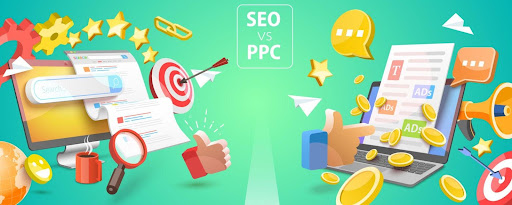
PPC is usually the faster path to traffic and lead testing. SEO is stronger for long-term authority, compounding visibility, and lower marginal traffic cost over time. One delivers speed. The other builds staying power.
Paid data can also improve keyword targeting, content planning, and conversion rate optimization across the wider site.
Industries That Benefit Most From PPC
Some sectors tend to see results faster than others, especially those with strong purchase intent and higher customer value.
These typically include:
Real estate
Healthcare and clinics
Legal services
E-commerce
Education and training
Home services
Hospitality and travel
Common PPC Challenges (And How to Avoid Them)
One of the biggest challenges is wasted spend from poor targeting. That is why negative keywords are so important.
Another issue is vague ad copy. Ads that try to appeal to everyone often convert poorly.
Landing pages also make or break results. Sending paid traffic to a generic homepage usually weakens performance. The page should match the ad message, load quickly, look credible, and make the next step obvious.
Poor tracking is another common problem. Without accurate conversion data, campaign decisions become little more than educated guesses.
How to Build a Better PPC Strategy
A better strategy starts with one clear goal. That goal could be calls, lead forms, bookings, purchases, or demo requests. Once the goal is clear, the campaign structure becomes easier to shape.
Keyword research should focus on intent, not just traffic volume. Ad copy should be specific, useful, and closely matched to the landing page. Testing should happen steadily, not randomly.
It also helps to watch the metrics that matter most: click-through rate, cost-per-click, conversion rate, cost per lead, and return on ad spend.
Google’s 2025 updates also show where the platform is heading. Text customization began rolling into Search campaigns from May 27, 2025, and AI Max expanded control and automation for advertisers using Search. That means the best-performing accounts in 2026 are likely to be the ones blending automation with active human oversight, not simply leaving everything on default settings.
Tools That Help Improve Results
Google Ads remains the core platform for most search-led campaigns. Keyword Planner is helpful for forecasting and query research. Google Analytics helps explain what happens after the click. Search Console adds value on the organic side by revealing search behavior and content opportunities.
Page testing tools also matter. Even small changes to headlines, forms, or calls to action can improve conversion rate without increasing spend.
Final Thoughts
The brands that tend to win are not always the ones with the largest budgets. They are the ones with the clearest offer, the best tracking, and the strongest page experience.
When used well, this channel remains one of the most reliable ways to generate qualified growth.
FAQs
What is PPC in digital marketing?
It is a paid advertising model where a business pays only when someone clicks on its ad. It is widely used across Google Ads and other digital platforms.
Why is pay-per-click advertising important for small businesses?
It gives smaller brands a way to appear in front of high-intent buyers quickly, even with controlled budgets. It also offers measurable performance, which helps reduce waste.
Is PPC better than SEO?
It is faster, but not automatically better. SEO builds long-term visibility, while paid search is better for speed, testing, and demand capture. Many brands perform best when both work together.
How much should a business spend each month?
That depends on competition, goals, average lead value, and how much testing is needed. A sensible budget is one that allows enough data for decisions without straining cash flow.
Does this channel still work in 2026?
Yes. It still works because search intent remains strong, and campaign tools now offer better automation, targeting, and measurement than before.